BREAD
Bread bin, not fridge
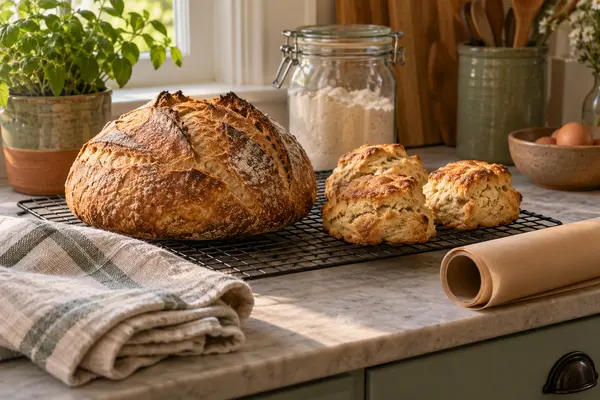
Fridge cold speeds up staling. A loaf for the next day or two is better wrapped at room temperature.
Why it stales doodlebaker
AFTER THE OVEN
The bake is only half the job. The rest is where it goes next.
Find the right shelf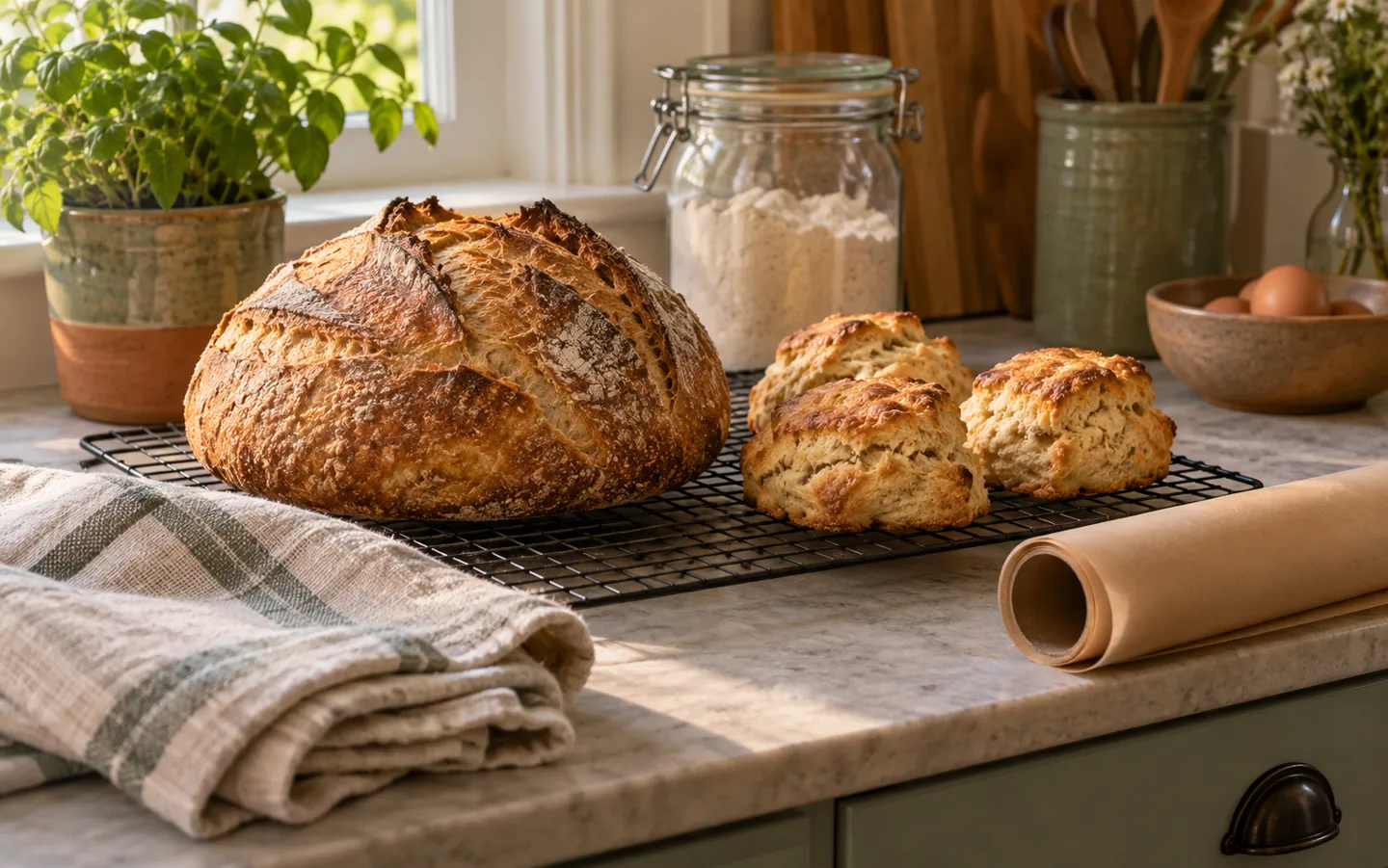
COOLthen store
The fridge quietly stales bread, the freezer pauses it, and the raw dough on the spoon is not as harmless as it looks. Here is what food-safety agencies and food scientists say about looking after home bakes, in plain English.
Plain English, with the sources linked.
At a glance
0–5°C and −18°C
Where to set them
The fridge should sit between 0 and 5°C, checked with a fridge thermometer about once a week. The freezer should be around −18°C, where most bacteria cannot grow.
FRIDGE AND FREEZER · FSA
1–2 hours
Cooked food, from oven to fridge
Cool cooked food at room temperature and get it into the fridge within one to two hours. That matters most for bakes that need chilling, such as custard or chiffon pies.
COOLING · FSA
TWO NUMBERS WORTH KNOWING
The UK Food Standards Agency's guidance
comes down to two temperatures and one clock.
Freezing pauses bacteria but does not kill them. Once something is fully defrosted, the FSA advises using it within 24 hours.
WHERE DOES IT GO?
Choose what is on your worktop. The answers come from the UK Food Standards Agency, the US cold storage chart, the USDA and a food-science review of bread staling.
Times are general guidance for home kitchens. Follow any storage advice on a recipe or package, and when in doubt, throw it out.
THE SHORT ANSWER
Bread, creamy pies and raw dough
each want something different.
BREAD
Fridge cold speeds up staling. A loaf for the next day or two is better wrapped at room temperature.
Why it stalesFOR LATER
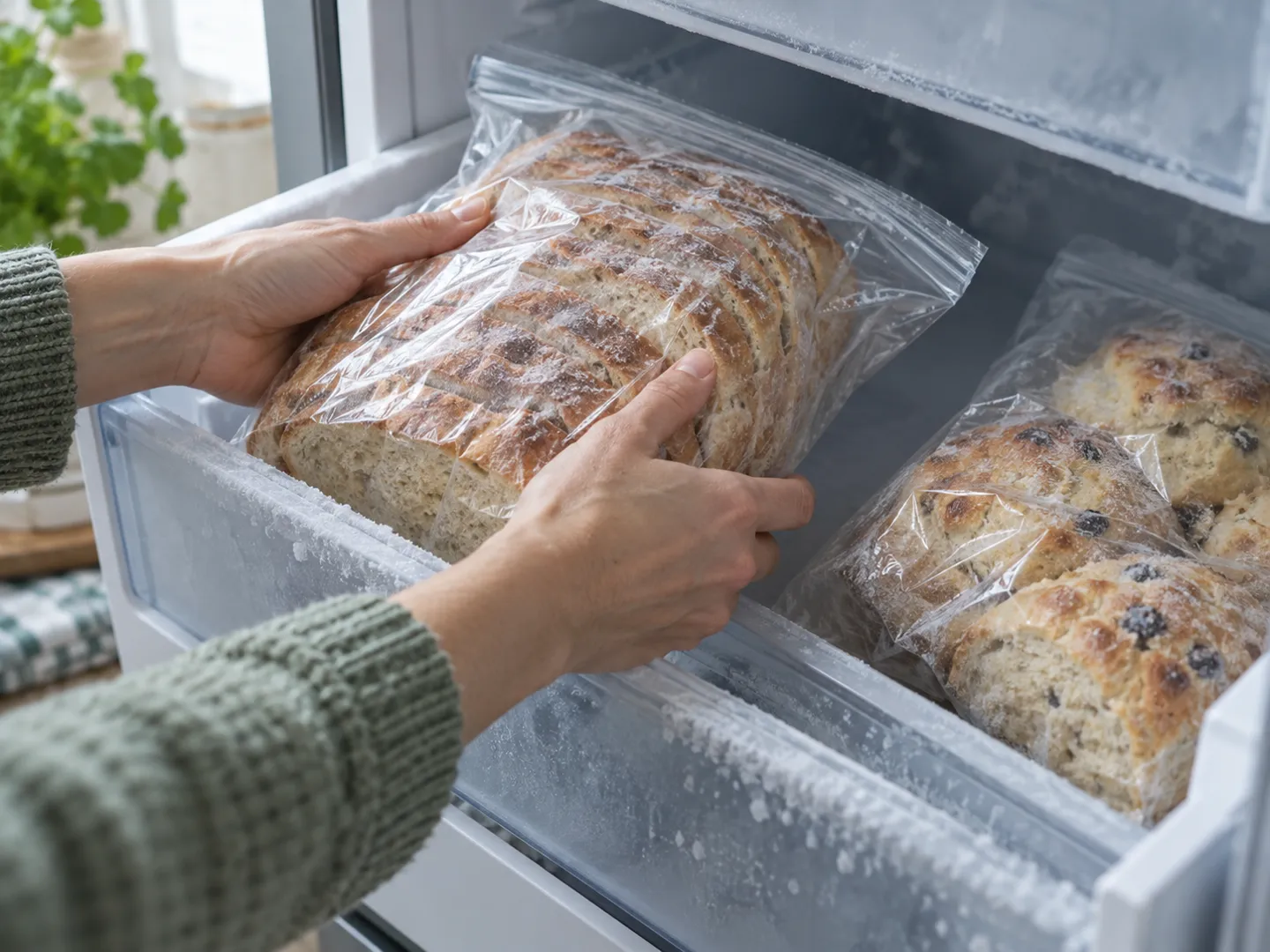
A freezer at around −18°C acts as a pause button. It keeps food safe, and its times are about quality.
The two numbersBEFORE THE OVEN
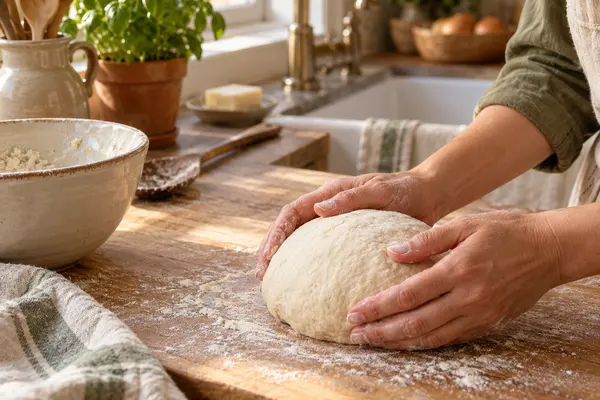
Grinding grain does not kill germs. Only baking or cooking does, so skip the spoonful of raw dough.
Kitchen habits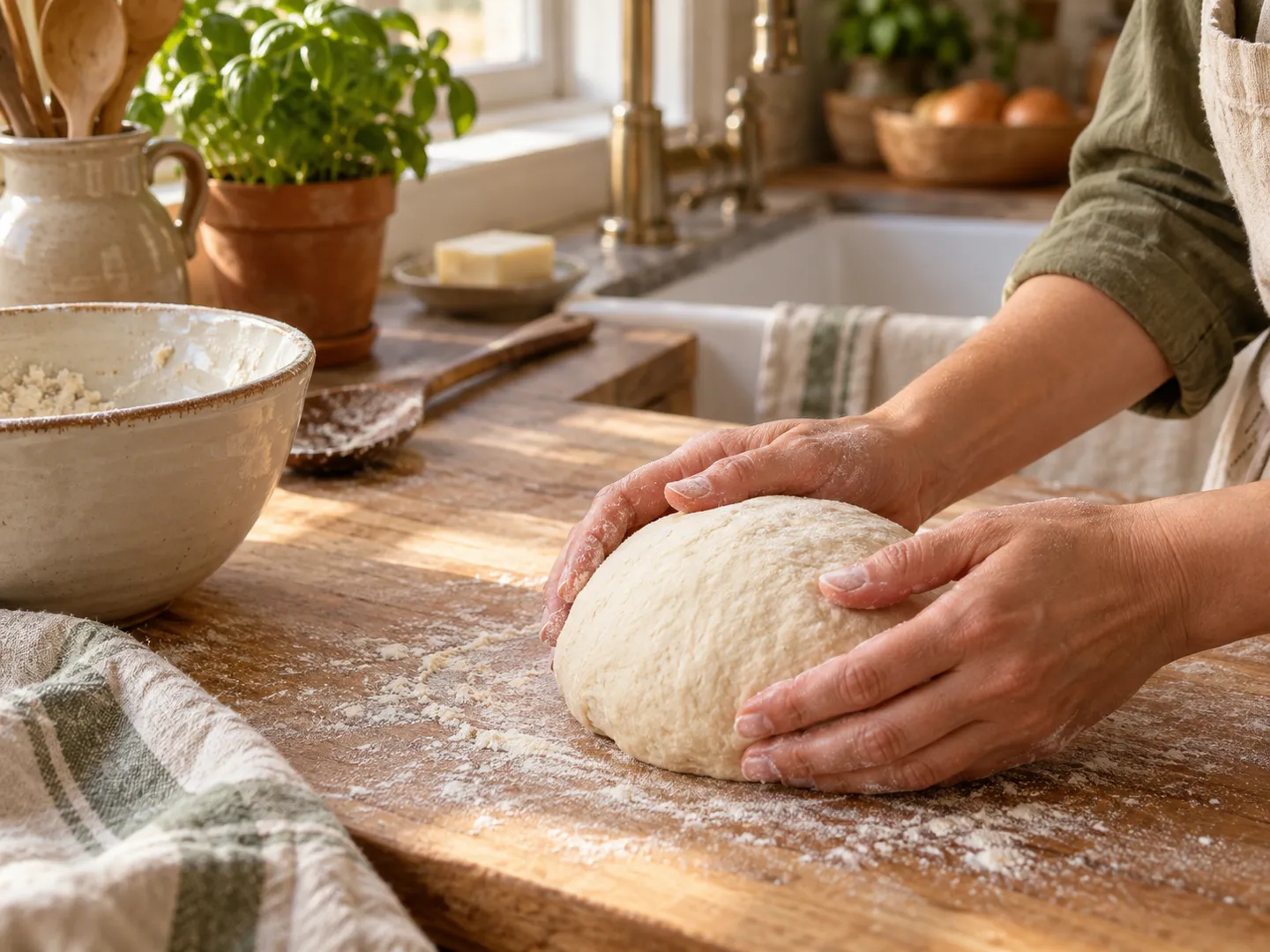
YOUR NEXT BAKE
Flour is a powder and spreads easily. The FDA advises keeping raw foods like flour and eggs apart from food that is ready to eat.
Wash hands with soap and running water, and bowls, utensils, tins and worktops in warm, soapy water, once raw dough is in the oven.
Let custard and chiffon pies cool, then get them into a fridge at 0 to 5°C within one to two hours. Eat them within 3 to 4 days.
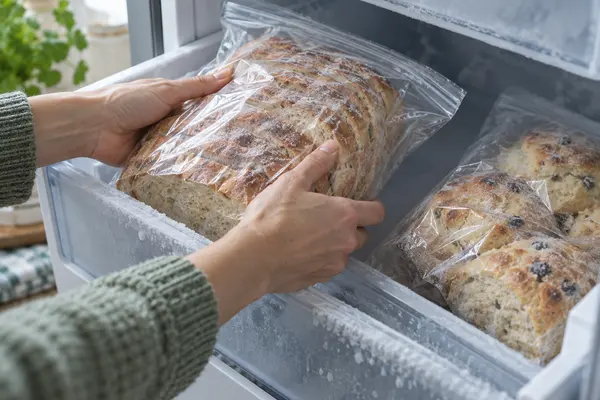
Freeze bread you will not finish soon, sliced and well wrapped, so you can take out a slice or two at a time instead of the whole loaf.
KITCHEN FACTS
The CDC notes that most flour has not been treated to kill germs such as E. coli and Salmonella. Grinding and bleaching do not remove them; baking or cooking does.
The CDC investigated outbreaks linked to raw flour or cake mix in 2016, 2019, 2021 and 2023. The FDA counts 168 known illnesses and 20 hospitalisations from flour outbreaks since 2009.
Staling is mostly starch re-forming crystals, called retrogradation. A food-science review notes it runs faster in the fridge, while a freezer at about −20°C almost halts it.
The US cold storage chart says food kept continuously at −18°C or below can be kept indefinitely. Its suggested freezer times, such as 1 to 2 months for a baked pumpkin pie, are for quality only.
The USDA says to discard mouldy bread and baked goods, because porous foods can be contaminated below the surface. Do not sniff them either.
QUICK QUESTIONS
Short answers to the questions home bakers ask most.
The CDC says no. Most flour is raw, meaning it has not been treated to kill germs such as E. coli and Salmonella, and those germs are killed only when the flour is baked or cooked. Raw and lightly cooked eggs can also contain Salmonella.
Not if you want it soft. Staling is mostly starch slowly re-forming crystals, a process called retrogradation, and it speeds up at fridge temperature. A food-science review notes that refrigerated bread stales more quickly than unrefrigerated bread, while a freezer at about −20°C almost halts it.
The US cold storage chart gives 3 to 4 days in the fridge after baking, or 1 to 2 months in the freezer. Custard and chiffon pies also keep 3 to 4 days in the fridge, but the chart says not to freeze them.
No. The USDA lists bread and baked goods among the foods to discard when mouldy, because porous foods can be contaminated below the surface. It also advises against sniffing mouldy food, which can cause breathing problems.
The UK Food Standards Agency describes a freezer at around −18°C as a pause button: most bacteria cannot grow, but they are not killed. The US chart says food kept continuously at −18°C or below stays safe indefinitely, and its freezer times are for quality only.
Sources
A NAME WITH A WARM CRUST
doodlebaker.com is part of the DoodleSale portfolio. It isn't in an auction right now, but you can ask about leasing it.